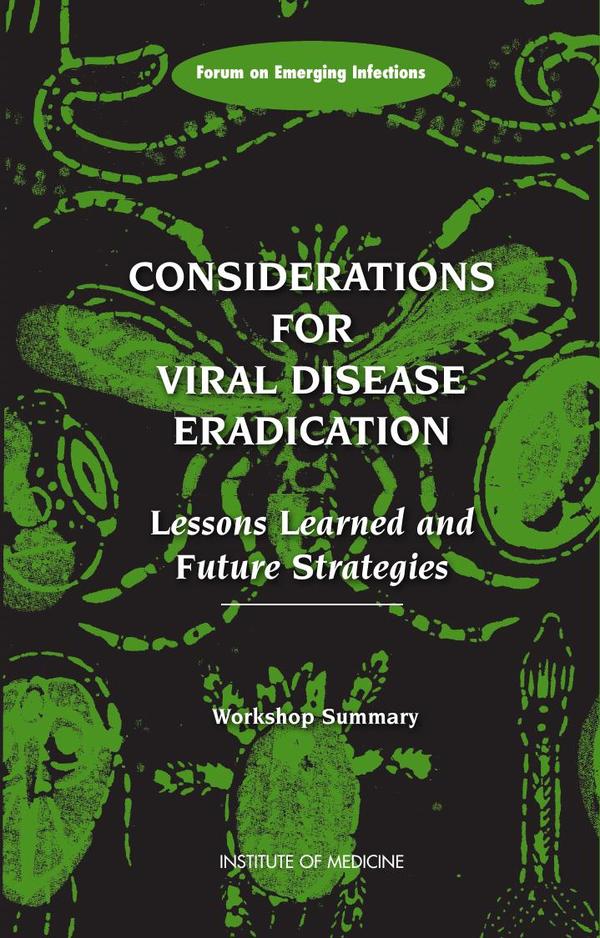
Since smallpox eradication, the science of eradication has changed and with it, our definitions of what diseases are possible to eradicate. However, eradication must not beget complacency. As has been learned from past control or eradication attempts with a variety of viral diseases, from yellow fever to influenza, accidental or intentional reintroduction is a real threatone that could strike anywhere and for which we need to be fully prepared. The criteria for assessing eradicability of polio, measles, and other viral infections have been debated extensively. With the elimination and eradication of several viral diseases on the horizon, issues surrounding the cessation of immunization activities become exceedingly important. In an effort to better understand the dynamics of disease eradication and post-immunization policies, the Institute of Medicine Forum on Emerging Infections hosted a two-day workshop (February 12, 2001) on The Consequences of Viral Disease Eradication. This book explores the principles underlying the biological challenges, medical interventions, the continuing research agenda, and operational considerations for post-immunization strategies for vaccine-preventable viral diseases, and highlights important efforts that may facilitate wise decision making.
Book information
- Author: Aa. Vv.
- Publisher: National Academies Press - 35
- Imprint: National Academies Press
- ISBN-13: 9780309084147
- Language: EN
- Edition: 1
- Publication date: 2002-07-18
- Pages: 232
- Format: 152 × 238 mm