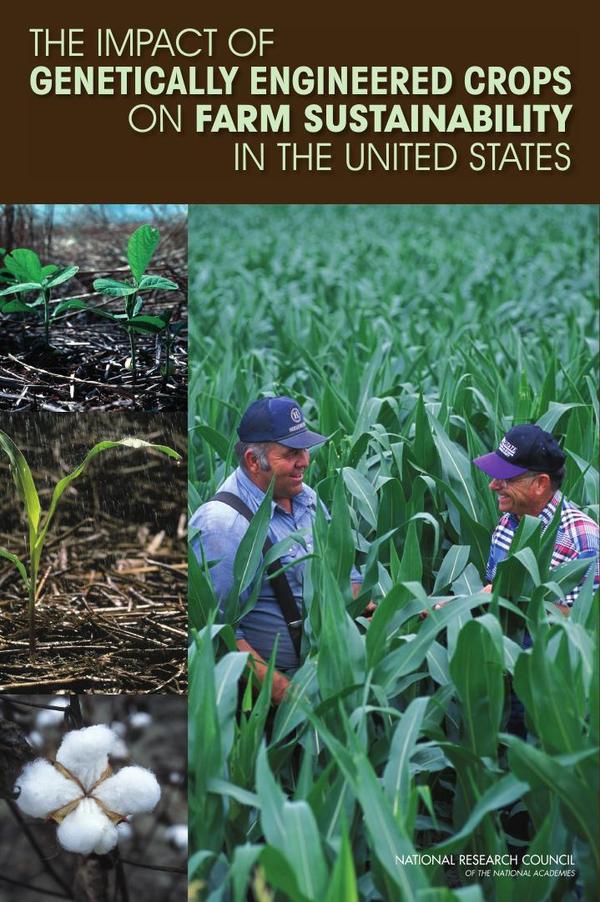
Since genetically engineered (GE) crops were introduced in 1996, their use in the United States has grown rapidly, accounting for 80-90 percent of soybean, corn, and cotton acreage in 2009. To date, crops with traits that provide resistance to some herbicides and to specific insect pests have benefited adopting farmers by reducing crop losses to insect damage, by increasing flexibility in time management, and by facilitating the use of more environmentally friendly pesticides and tillage practices. However, excessive reliance on a single technology combined with a lack of diverse farming practices could undermine the economic and environmental gains from these GE crops. Other challenges could hinder the application of the technology to a broader spectrum of crops and uses.Several reports from the National Research Council have addressed the effects of GE crops on the environment and on human health. However, The Impact of Genetically Engineered Crops on Farm Sustainability in the United States is the first comprehensive assessment of the environmental, economic, and social impacts of the GE-crop revolution on U.S. farms. It addresses how GE crops have affected U.S. farmers, both adopters and nonadopters of the technology, their incomes, agronomic practices, production decisions, environmental resources, and personal well-being. The book offers several new findings and four recommendations that could be useful to farmers, industry, science organizations, policy makers, and others in government agencies.
Book information
- Author: Aa. Vv.
- Publisher: National Academies Press - 35
- Imprint: National Academies Press
- ISBN-13: 9780309147088
- Language: EN
- Edition: 1
- Publication date: 2010-07-26
- Pages: 270
- Format: 152 × 229 mm